
Vape Battery Safety: The Guide Every Vaper Should Read Once
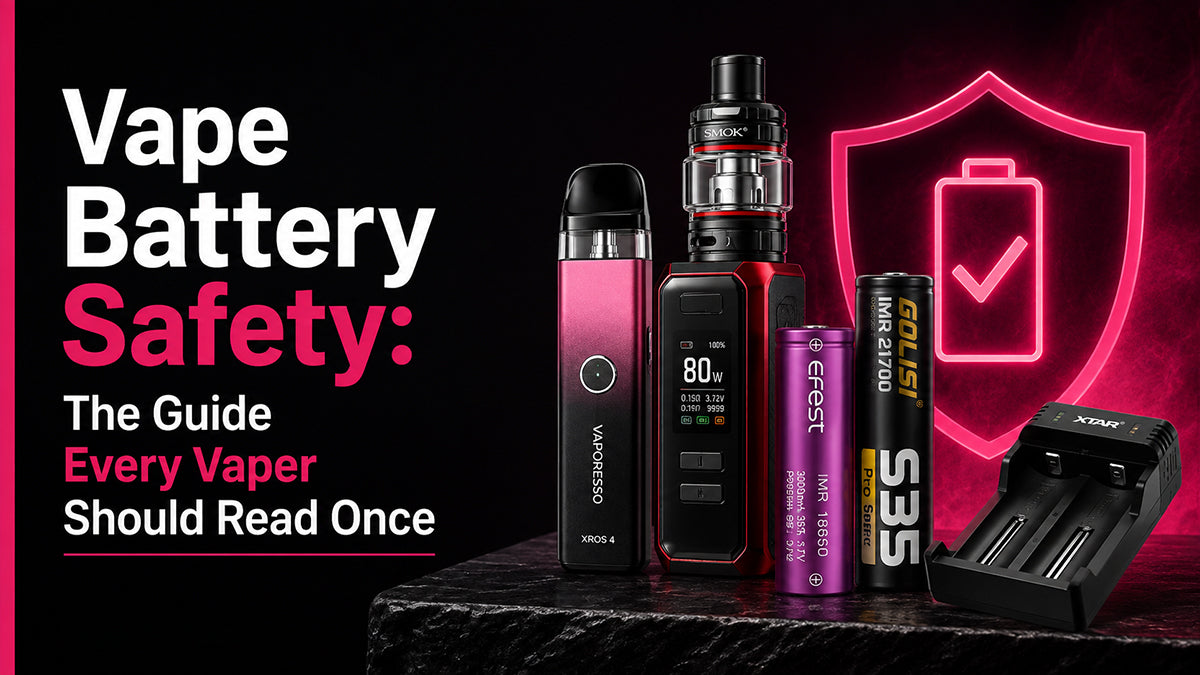
Vape batteries are lithium-ion cells — the same chemistry as your phone — and they're extremely safe when treated with the same basic respect. This is the unglamorous guide worth reading once.
Charging: where nearly all problems live
Use a proper cable and a modest plug. Charge from a computer port or a standard 5V phone plug — not a high-wattage fast-charger for laptops, and never a damaged cable. Devices with 2A fast charging (many modern kits) are designed for it; older or budget devices aren't, and the cheapest no-name plugs are the single most common culprit in charging incidents.
Don't charge unattended for long periods. Overnight-on-the-pillow is the classic mistake. Modern kits have overcharge protection, but protection circuits are a backstop, not a lifestyle. Charge while you're around; unplug when full.
Charge on hard surfaces. Not bedding, not sofas — batteries warm as they charge and need to shed that heat.
Temperature and physical care
Heat is the enemy: don't leave devices on dashboards, radiators or in direct summer sun, and don't vape a device that's become hot to the touch — let it cool. Cold matters less but saps performance; inside pockets beat outside bags in winter. A dropped device that's dented near the battery, hissing, swelling, or smelling sweet-chemical is done — stop using it and take it to a battery recycling point (most supermarkets have one). Never bin batteries in household waste.
Travel
Flights: vapes and spare batteries go in cabin baggage only, never checked luggage — airline rules are unanimous. Don't charge on the plane, and check your destination's vaping laws before you fly; several popular destinations ban vapes entirely.
The reassuring summary
Sensible cable, attended charging, no heat, retire damaged cells — that's the entire discipline. Devices from reputable brands (everything in our pod kits and vape mods ranges) carry the protection circuits that make the rest routine. 18+ only.